
19 Years Β· America's Largest Robotics Integrator
Home/Capabilities/Agriculture
For growers, researchers, and ag-tech educators

Agriculture drones and ground robots that scout every acre and act before yield slips

Agricultural drones that survey 500+ acres per hour with multispectral imagery, AI-driven crop health assessment, and variable-rate application data. Ground robots for soil inspection. Education platforms for ag colleges training the next generation.

500+ acres
surveyed per drone flight session with multispectral crop-health imagery
The current approach

Walking fields is how growers used to find out it was too late

Detection lag

By the time you can see the problem from the truck, you lost the field

Pest pressure, drought stress, and disease show up in the multispectral signature days or weeks before they're visible to the human eye. Drone surveys catch the problem early, when targeted intervention is still cheap.

Input waste

Blanket pesticide and fertilizer applications waste 30-50%

Uniform application across a non-uniform field means most of the input doesn't go where it's needed. Variable-rate application driven by drone data targets exactly the zones that need treatment β€” lower input cost, lower environmental impact, better yield.

Education and workforce

Ag colleges are catching up on precision tech

The next generation of growers needs hands-on experience with drones, ground robots, and data analysis. Ag colleges are deploying RobotLAB platforms to train precision-agriculture technologists for a workforce that's outpacing the curriculum.

How Agriculture robots work

Three steps from operations to autonomy.

STEP 01

Map your space

Our techs map your facility. Robots learn doorways, glass walls, no-go zones.

STEP 02

Train the schedule

Set zones, times, and modes. Robots run on a schedule that fits your operation.

STEP 03

Measure & iterate

Fleet dashboard shows runtime, coverage, and maintenance needs. Weekly reports.

Agriculture robots we carry

Three agriculture platforms we deploy

Survey drones, ground inspection rovers, and ag-education platforms for growers and ag colleges.

Compare Β· 0/4 selected
οΌ‹ Add
οΌ‹ Add
οΌ‹ Add
οΌ‹ Add
Showing 3 of 3 robots
AgileX Limo ROS2
AgileX Agriculture

AgileX Limo ROS2

A compact, multi-modal ROS 2 research rover β€” four steering configurations, LiDAR + depth sensing, and an Intel i7 brain on a desktop-sized platform built for robotics education and algorithm development.

RaaS $105/mo(36mo)
From $3,200 purchase
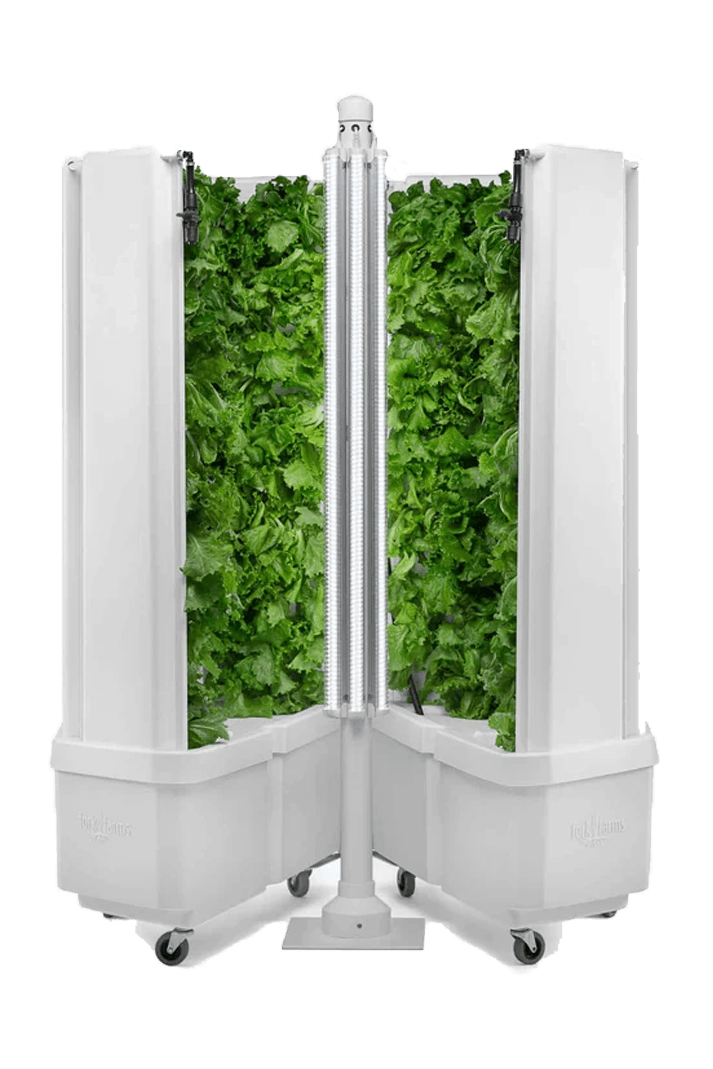
Fork Farms Flex Farm – Indoor Hydroponic System
Fork Farm Agriculture

Fork Farms Flex Farm – Indoor Hydroponic System

Grow 394+ pounds of fresh produce a year in under 10 square feet β€” a turnkey indoor vertical farm built for classrooms, cafeterias, and food programs.

RaaS $165/mo(36mo)
From $4,995 purchase
AgileX Hunter 2.0 Rover
AgileX Agriculture

AgileX Hunter 2.0 Rover

A high-payload, Ackermann-steering UGV platform that lets research teams and integrators prototype real autonomous-driving behavior on a car-like chassis.

RaaS $439/mo(36mo)
From $12,900 purchase
“Agriculture is one of the oldest industries and one of the newest adopters of robotics. A drone that surveys 500 acres in an hour replaces days of manual field walking. Precision data on soil moisture, crop health, and pest detection means farmers make better decisions faster, with less waste and higher yield.”
E
Elad Inbar
CEO and Founder, RobotLAB
Case study

Regional grower: drone surveys cut pesticide use 35% in season one

Regional row-crop grower adopted weekly drone surveys plus variable-rate application driven by multispectral data. First-season results: 35% reduction in pesticide application volume, yield up modestly, and detection of an early-season pest outbreak that would have cost an estimated 12% of the field if caught late.

Read the case study β†’
Ready to deploy Agriculture?

Pick the right Agriculture robot.

Get a free site survey. We'll shortlist 2–3 robots that fit your operating conditions and budget.

  • βœ“ Free site survey & shortlist within 5 business days
  • βœ“ Custom ROI model and payback estimate
  • βœ“ Financing, RaaS, and purchase options
Questions & answers

Agriculture Robots: Questions & Answers

Common questions growers, ag operators, and research teams ask about deploying robots and automated growing systems on farms and in controlled-environment agriculture. RobotLAB integrates, deploys, trains, and services agricultural robotics from 25+ manufacturers.

  1. How much do agriculture robots cost?

    It varies widely by platform and job: a compact autonomous research/scouting rover like the AgileX Limo ROS2 sits at the lower end, while rugged field rovers like the AgileX Hunter 2.0 and turnkey indoor growing systems like the Fork Farms Flex Farm carry higher price points tied to capacity. Because configuration, sensors, and integration drive the final number, the most accurate path is to request a quote for your specific operation. RobotLAB can also build an ROI model around your acreage, crop, and labor rates.

  2. What is the ROI and payback period on agricultural robots?

    Payback depends on what the robot replaces or augments, such as manual scouting, spraying, harvesting labor, or produce purchasing for an indoor farm. Most operations target a payback on the order of 1 to 3 years, with the biggest savings coming from reduced labor hours and more consistent yields. Ask RobotLAB for an ROI model built on your crop, labor costs, and growing cycles rather than a generic figure.

  3. What do agriculture robots actually do on a farm?

    Depending on the platform, they autonomously scout fields and collect plant-health data, carry payloads and tools across rough terrain, and serve as mobile bases for sensors, cameras, and robotic arms. The AgileX Hunter 2.0 is a high-clearance Ackermann rover built for outdoor field work, while the AgileX Limo ROS2 is a compact multi-modal platform used to prototype and test autonomous ag tasks. RobotLAB helps match the right platform to scouting, data collection, or material-handling jobs.

  4. Can robots help with the farm labor shortage?

    Yes. Robots take on repetitive, time-sensitive, or physically demanding tasks like field scouting, data collection, and transport, which lets a smaller crew cover more ground during tight planting and harvest windows. They don’t eliminate skilled workers; they redirect labor toward higher-value decisions and reduce reliance on hard-to-find seasonal hands. The labor benefit is most pronounced in operations where you struggle to staff repetitive monitoring or hauling tasks.

  5. What is indoor or controlled-environment agriculture, and how do robots fit in?

    Controlled-environment agriculture grows crops indoors using hydroponics and managed light, water, and nutrients instead of open fields. The Fork Farms Flex Farm is a self-contained vertical hydroponic system that can grow leafy greens year-round in a small footprint, with predictable cycles and minimal water use. It’s a fit for schools, institutions, grocers, and food-service operations that want fresh produce on-site regardless of season or climate.

  6. How much produce can an indoor hydroponic system like the Flex Farm grow?

    A single Flex Farm unit grows leafy greens and herbs on the order of hundreds of plants per harvest cycle in roughly 10 square feet of floor space, with new cycles every few weeks. Actual yield depends on crop choice, lighting, and how you stagger plantings. Ask RobotLAB for current per-unit capacity figures and a model for the number of units your demand requires.

  7. Do agriculture robots work in real outdoor field conditions?

    Field-grade platforms like the AgileX Hunter 2.0 are built for it, with high ground clearance, all-terrain wheels, and a chassis designed for uneven, muddy, or sloped ground. Lighter platforms like the Limo ROS2 are better suited to greenhouses, research plots, and controlled testing rather than open acreage. RobotLAB helps you choose terrain-appropriate hardware and configures it for your environment before deployment.

  8. What is Robots-as-a-Service (RaaS) for agriculture and is it cheaper than buying?

    RaaS lets you pay a recurring subscription instead of a large upfront capital purchase, which spreads cost across growing seasons and typically bundles support and maintenance. It often makes sense when you want to pilot a use case, avoid tying up capital, or align spend with seasonal cash flow. Whether RaaS or outright purchase is cheaper over time depends on your usage horizon, so ask RobotLAB to compare both for your operation.

  9. Do I need robotics or programming expertise to run these systems?

    No. Turnkey systems like the Flex Farm are designed for operators without a technical background, and RobotLAB provides training so your team can run day-to-day operations. Research and development platforms like the AgileX Limo ROS2 are programmable and ROS2-based for teams that want to build custom autonomy, but that’s optional, not required. RobotLAB sets the level of automation to match your team’s comfort and goals.

  10. What kind of training and ongoing service does RobotLAB provide?

    RobotLAB handles deployment, hands-on operator training, and nationwide service so the equipment stays productive through your growing season. Because we’re a multi-brand integrator, support covers the full system rather than pointing you back to individual manufacturers. Service plans and response options vary by platform, so confirm coverage details when you request a quote.

  11. Which agriculture robots and growing systems does RobotLAB offer?

    On this page that includes the AgileX Limo ROS2 (a compact multi-modal autonomy and research platform), the AgileX Hunter 2.0 Rover (a rugged outdoor field rover), and the Fork Farms Flex Farm indoor hydroponic system. As an integrator working with 25+ manufacturers, RobotLAB can also recommend platforms beyond this list based on your crop, acreage, and goals. Tell us the task and we’ll match the right hardware.

  12. How do I get a demo or quote for agriculture robots?

    Tell RobotLAB about your operation, the crops or tasks involved, and your goals, and we’ll recommend a platform, build an ROI model, and arrange a demo. We handle integration, training, and nationwide service so you’re supported from pilot through full deployment. To get started, use the form on this page or call 1-87-RobotLAB.

Have another question? Same-day response. Ask a Agriculture specialist β†’ Browse case studies